← Back to news
Featurechampions leagueserie a
Como's First Champions League Night, and the Coach Who Wants It to Feel Like Any Other Game
Socc360 Newsroom9/9/20265 min read
Cesc Fabregas has urged his Como squad to keep their heads ahead of the club's maiden Champions League fixture. The lake-side club's rapid rise from Serie B makes that easier said than done.
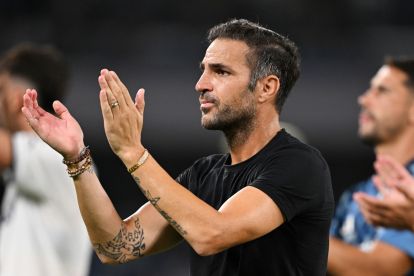
The instruction, delivered the way Cesc Fabregas tends to deliver these things — softly, with a half-smile that doesn't quite reach the question — was the one he always reaches for. Treat it like any other game. Don't get caught in the lights. Walk out, do the work, walk back in.
It is, by now, a familiar Fabregas register. The 38-year-old has built a coaching identity on the unfashionable idea that a football match is a football match, however bright the stage gets. With Como preparing to play their first ever Champions League fixture, he has reached for the same quiet note.
"Cesc Fabregas, head coach of Como, has spoken ahead of the club's maiden Champions League appearance, urging his players not to be overwhelmed by the occasion," according to a report in the newsroom. "The Spanish coach emphasized a calm, business-as-usual mentality, a hallmark of his coaching philosophy." The match, the report added, "represents a milestone for the lake-side club, who have climbed from Serie B to European competition in a short period."
The words are easy to write down. They are, in fact, harder to live by — particularly when the team stepping onto the pitch is Como, a club that, until very recently, was still looking up at Italian football from the floor below it.
Como's story has been told, in pieces, for the better part of two seasons. A modest lake-side club, founded in 1907, returned to Serie A and have, in the words of the same report, "enjoyed a remarkable rise under Fabregas." They have done it quickly, with intention, and with a coach whose own path through the game — from the Barcelona academy, through the Premier League, through some of the biggest nights the Champions League has staged, into the unglamorous later years of a playing career, and then a first proper job in the dugout — has given the project a particular kind of pull.
That pull has not been invisible. The squad at Como, put together over the past two seasons, has a different look to the one that was playing in Serie B. The young Italians in it have had the kind of seasoning that comes from being asked to play, week after week, against the better sides in Serie A — and to lose some of those weeks, too, without the season collapsing around them.
Live scores, lineups and goal alerts for the teams in this story — get Socc360 for iOS.
It is one thing to climb. It is another to do it without the whole thing sliding back down. Como, to this point, have done both.
There is a particular kind of pressure that comes with being the first to do something at a small club. The squad that has come together at Como over the past two seasons understands it. The supporters who followed the team through the lower divisions, up the autostrada and back, understand it. The young Italians in the dressing room, several of them playing at this level for the first time in their careers, understand it.
Fabregas' job, in the week of the game, is to take that understanding and turn it into something useful on a training pitch. Not to deny it. Not to drown the squad in it. Just, as he put it, to treat it like any other game.
Whether the players can hear him above the noise of their own story is the part he cannot control. By the time the first whistle goes, the message has either landed or it hasn't. The dressing room, on these nights, tends to be a quieter place than the outside thinks.
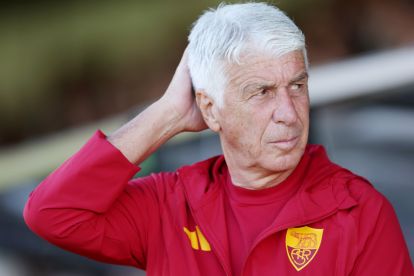
What is already true is that Como are not the only story in this season's Champions League asking what a club does with a moment. Roma, under a new manager in Gian Piero Gasperini, have said publicly that they are "curious" to face the best teams in Europe rather than daunted by them. Arsenal, whose squad has been publicly questioned by Paul Merson — writing for Sky Sports that the Gunners lack the kind of X-factor signing that tends to decide Champions League nights — will discover, in the months ahead, whether the critique is fair. The competition is full of clubs trying, in their own way, to be larger than the version of themselves that arrived at the draw.
Como's version of that question is the most acute. They have the smallest margin. They also have, by some distance, the least to lose.
For Como, the next fixture cannot be a referendum on whether they belong. It cannot be, on a single night, against an opponent who on paper has more, costs more, and has been here before. The Champions League is not built to reward a club for getting to it. It is built to test what a club does once they have.
If Fabregas is right — and his instincts, even at this early point in his coaching life, have not been bad — Como will be harder to rattle than the league table suggests. They will be organised. They will try to play the kind of football their coach wants to be known for. They will, almost certainly, lose games in this competition, because the math of the draw says so. They will not, if the message has landed, be the kind of team that gets pushed off the ball because the stadium is louder or the badge on the other shirt is more familiar.
That, more than any single result, is the test of the months ahead. Whether Como leave the Champions League with a single point, a single goal, or a single memory that lasts, the first night will already have done its work.
And on the lake, in the dressing room of a club that has climbed from Serie B to the Champions League in barely two seasons, the mood in the camp is — in the words of the report — calm. Whether it stays that way, when the first night the lights come up, is the only thing that matters now.